Uzbekistan
Khiva
An ancient Silk Road oasis in the Khorezm desert, whose walled old town Itchan Kala is a living open-air museum of turquoise domes and minarets.
Best seasonApril–June and September–October
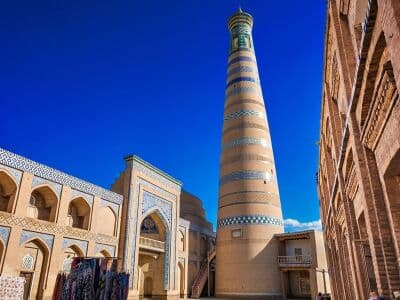
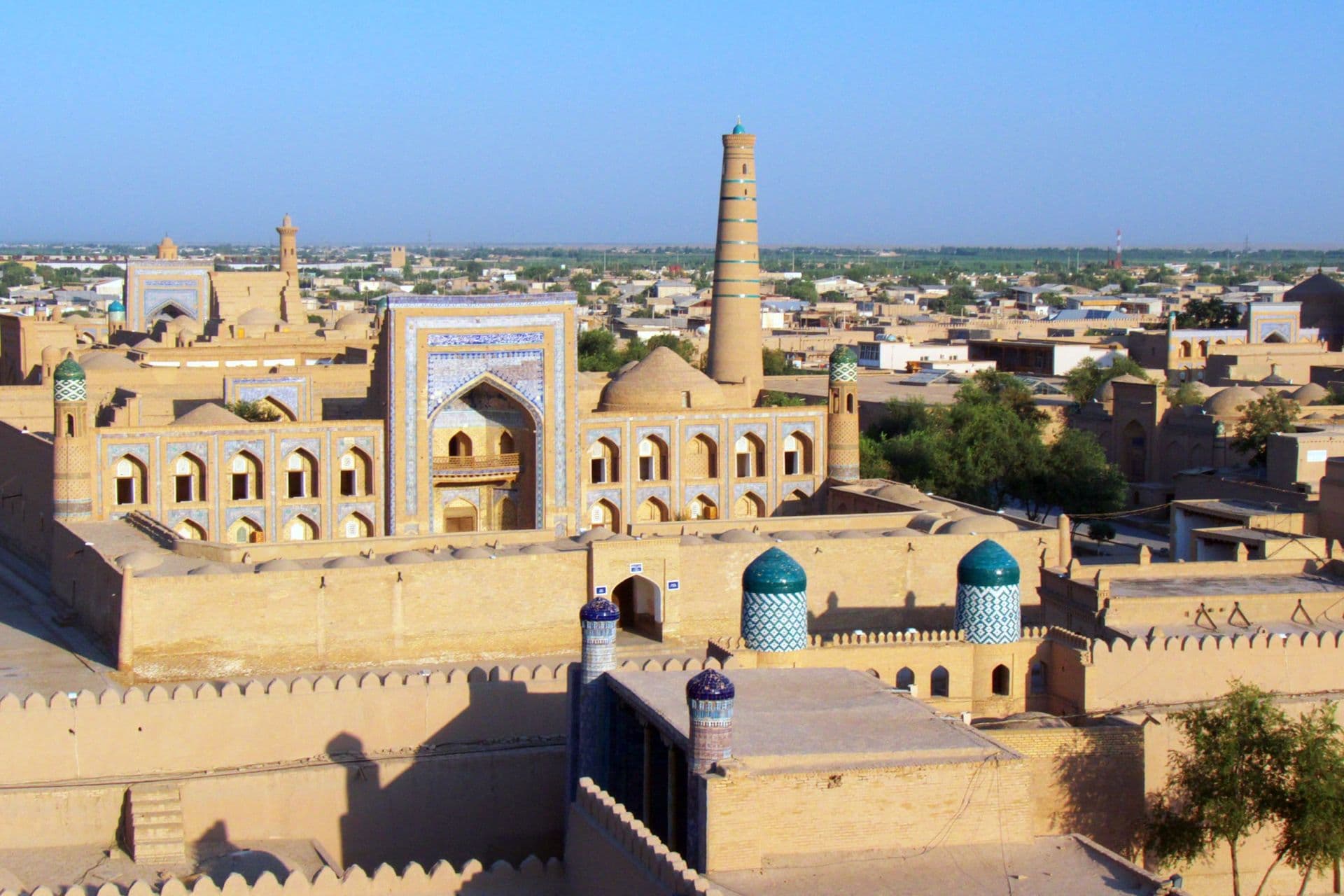
Khiva is one of Central Asia's best-preserved historic cities, rising from the Kyzylkum desert in the Khorezm region of western Uzbekistan. For more than a thousand years it was a key caravan stop on the Silk Road and later the capital of the powerful Khanate of Khiva, a place of grand bazaars, madrasahs and a notorious slave market. Its sun-baked mud-brick walls and clustered turquoise-tiled domes have earned it the nickname the City of Turquoise Domes. The heart of the city is Itchan Kala, the inner walled town and a UNESCO World Heritage Site. Enclosed by 10-meter ramparts, this compact maze of streets packs in more than 50 monuments and 250 old houses. Among its highlights are the Kunya-Ark citadel, the residence of Khiva's rulers; the soaring 57-meter Islam Khodja Minaret; and the stout, unfinished Kalta Minor minaret sheathed in glazed blue tiles. Wandering the old town reveals one masterpiece after another: the many-columned Juma Mosque, whose hall rests on 213 carved wooden pillars; the lavishly tiled Tash Hauli Palace with its harem courtyards; and the Pakhlavan Mahmud Mausoleum, a serene pilgrimage shrine. Workshops of woodcarvers, ceramicists and silk weavers keep age-old crafts alive along the lanes. Khiva is easily combined with Turkmenistan, lying close to the border crossing from Konye-Urgench and Dashoguz, and it pairs naturally with Bukhara and Samarkand on a classic Uzbekistan itinerary. Climb the ramparts at sunset to watch the desert light turn the minarets and domes to gold.
Gallery